Ultomiris ULTOMIRIS® (ravulizumab) Study Design

Study Design

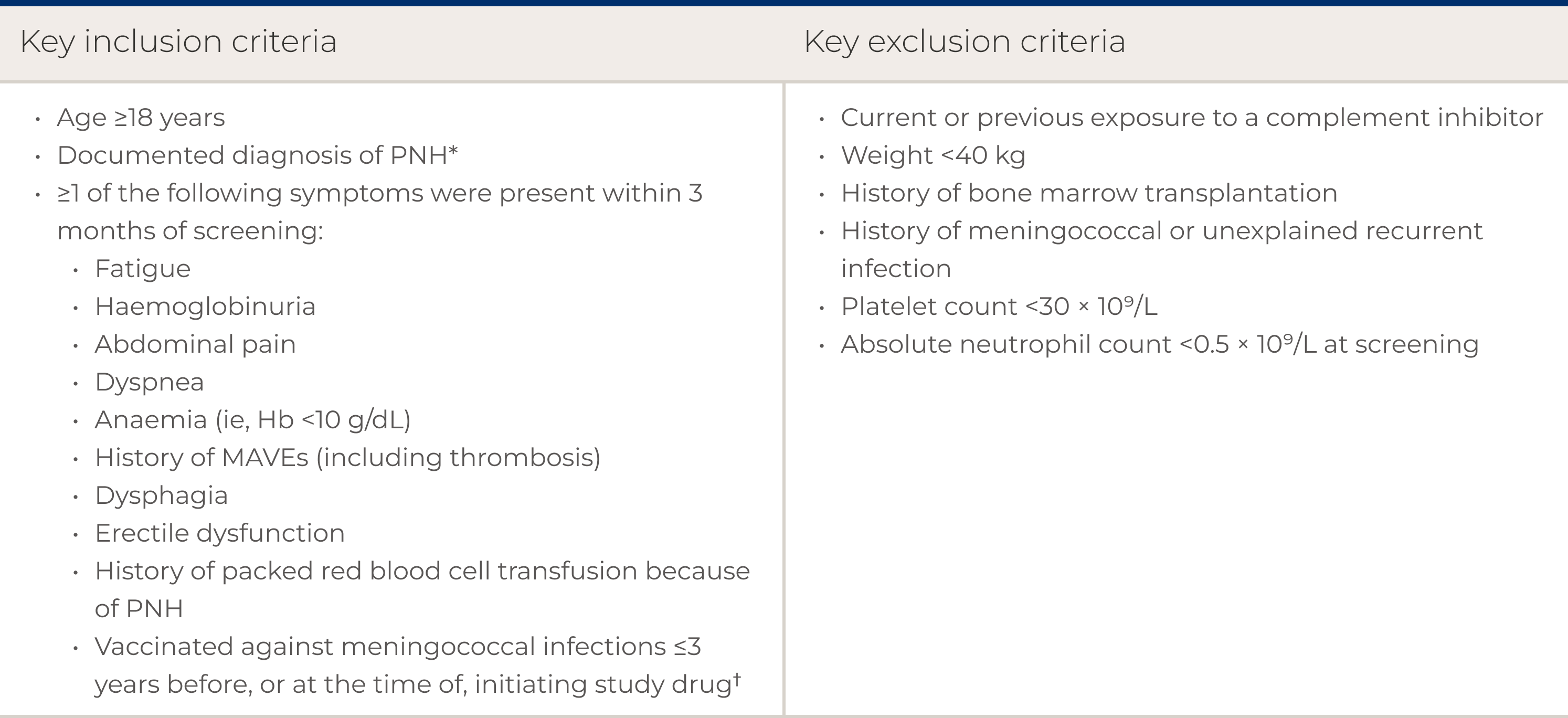
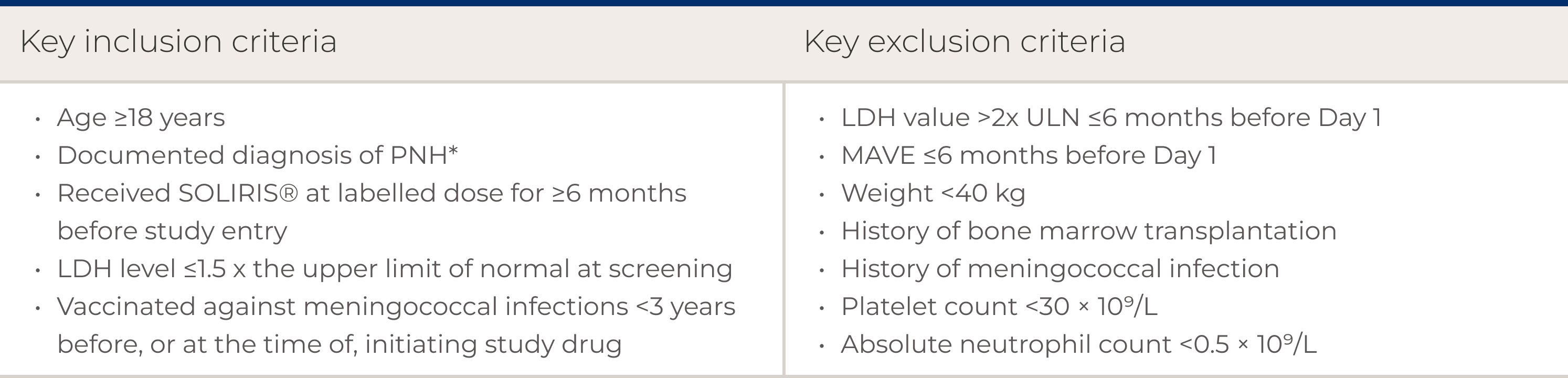
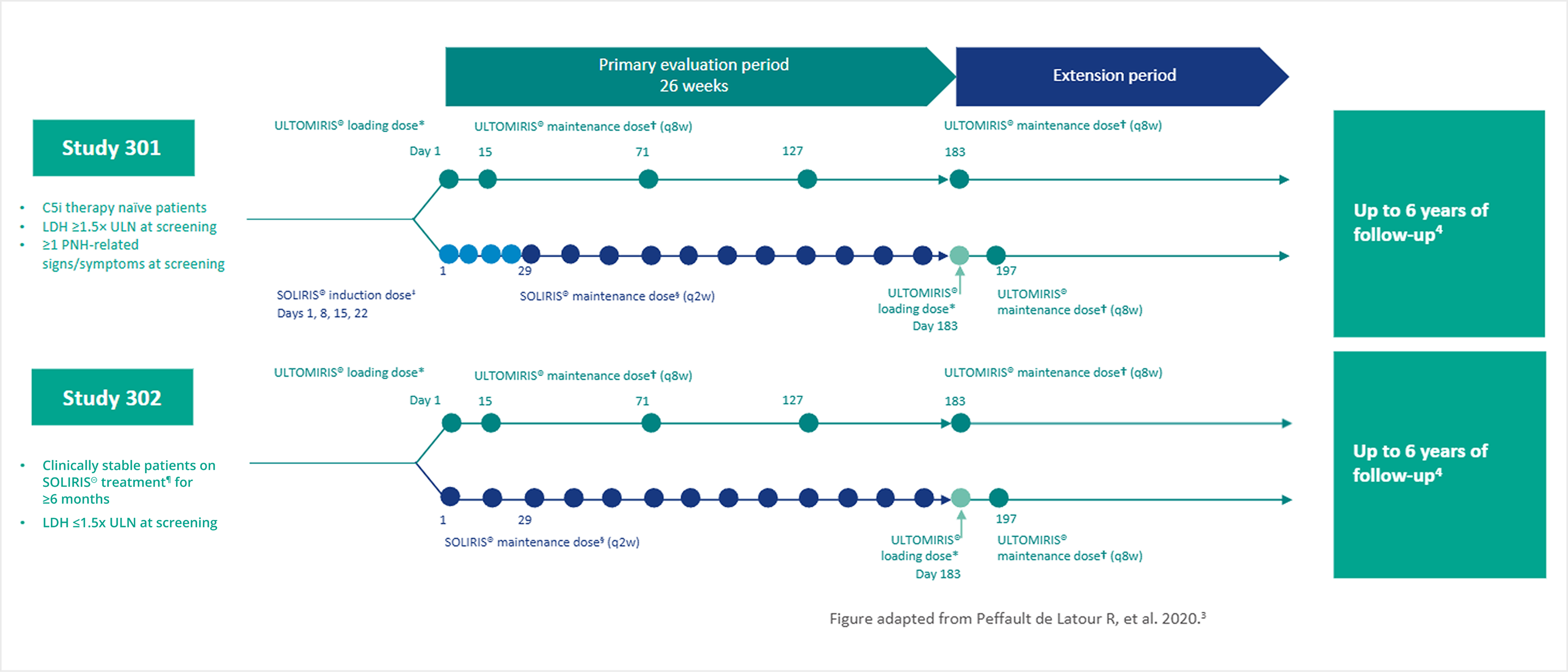
The efficacy and safety of ULTOMIRIS® in adults (≥18 years and ≥40kg) with a confirmed diagnosis of PNH were assessed in two Phase 3, open-label, randomised, active-controlled, multicentre, non-inferiority studies in complement inhibitor-naïve (Study 301)1 and complement-inhibitor (SOLIRIS® (eculizumab)) experienced (Study 302) patients, respectively.1,2

*ULTOMIRIS® loading dose was 2400mg for patients weighing ≥40kg to <60 kg; 2700mg for patients weighing ≥60kg to <100kg; and 3000mg for patients weighing ≥100kg.3

†ULTOMIRIS® maintenance dose was 3000mg for patients weighing ≥40kg to <60kg; 3300mg for patients weighing ≥60kg to <100kg; and 3600mg for patients weighing ≥100kg.3

‡SOLIRIS® (eculizumab) induction dose was 600 mg (Study 301 only).3

§SOLIRIS® (eculizumab) maintenance dose was 900 mg.3

¶Approved dose for PNH.3

Alt Alt Alt Alt Alt Alt

*Confirmed by high-sensitivity flow cytometry evaluation of RBCs and WBCs with granulocyte or monocyte clone size of ≥5% , and LDH level ≥1.5× ULN at screening.1

Patients who initiated study drug treatment <2 weeks after receiving a meningococcal vaccine were required to receive treatment with appropriate prophylactic antibiotics until at least 2 weeks after vaccination. Routine prophylactic antibiotic treatment was otherwise optional.1
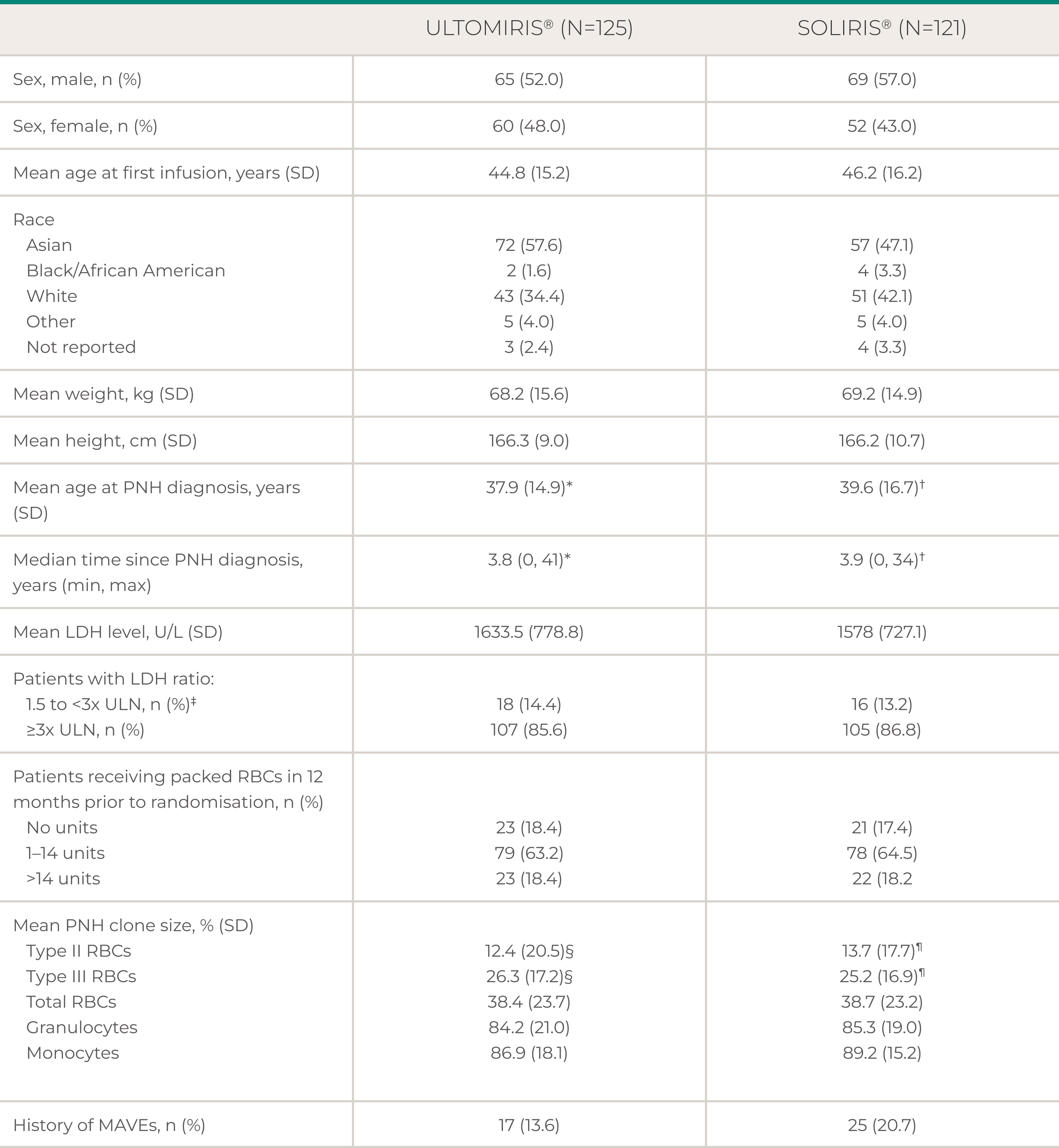
*N=123.1

N=118.1

The ULN for LDH is 246 U/L.1

§N=124.1

N=120.1

*(fatigue, hemoglobinuria, abdominal pain, dyspnea, anemia [hemoglobin<10 g/dL], MAVEs including thrombosis, dysphagia, or erectile dysfunction) in the presence of LDH ≥2 x ULN after prior reduction of LDH to <1.5 x ULN on treatment

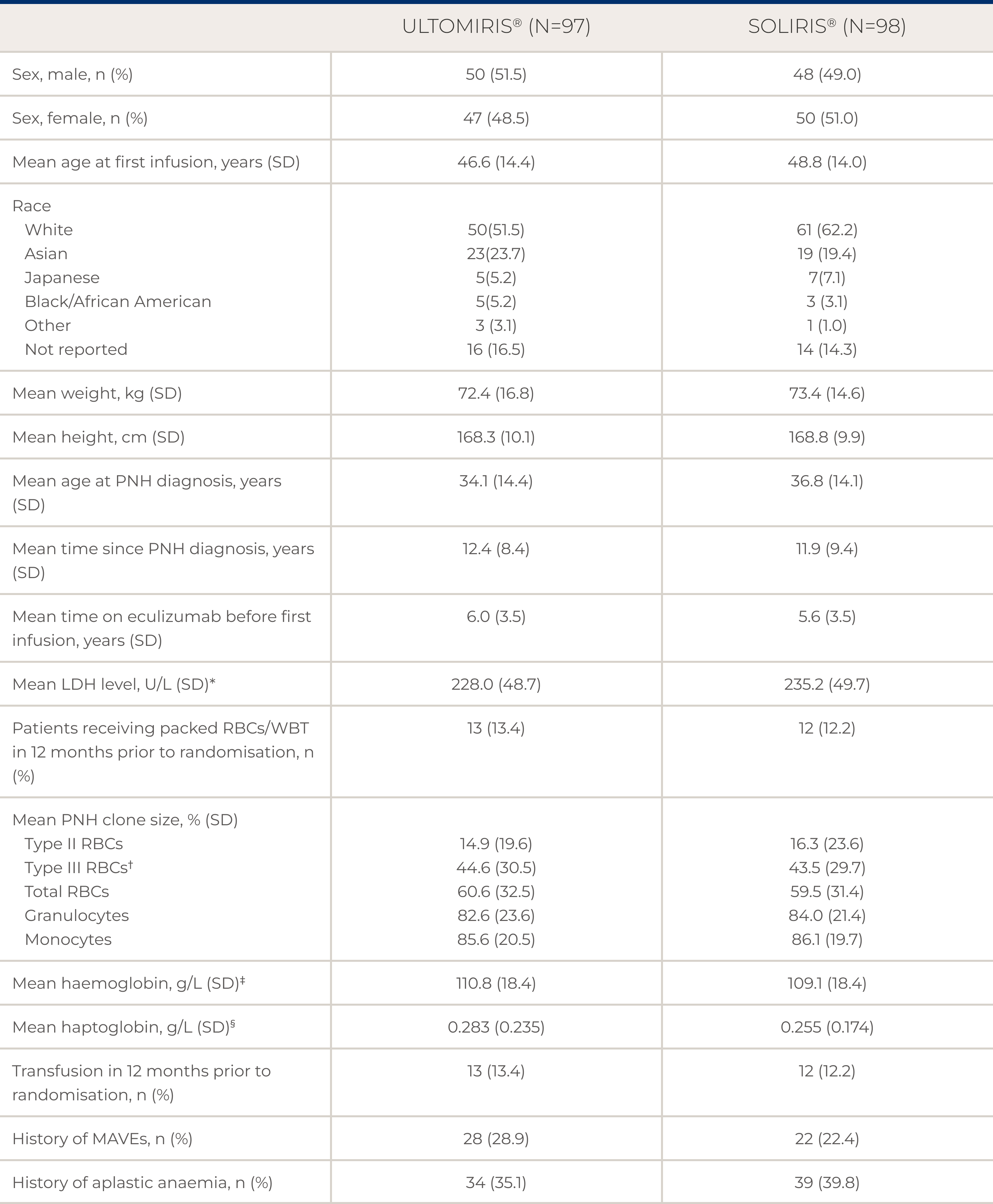
*Confirmed by high-sensitivity flow cytometry evaluation of RBCs and WBCs with granulocyte or monocyte clone size of ≥5%.2

*Normal range, 120 to 246 U/L.2

Erythrocytes with complete deficiency in glycosylphosphatidylinositol-anchored proteins, including complement regulatory proteins CD59 and CD55.2

Normal range, 11.5 to 16.0 g/dL (women) and 13.0 to 17.5 g/dL (men).2

§Normal range, 0.4 to 2.4 g/dL.2

*(fatigue, hemoglobinuria, abdominal pain, dyspnea, anemia [hemoglobin<10 g/dL], MAVEs including thrombosis, dysphagia, or erectile dysfunction) in the presence of LDH ≥2 x ULN after prior reduction of LDH to <1.5 x ULN on treatment
ULTOMIRIS® Efficacy
Please report any adverse events via your national reporting system. Adverse events can also be reported to Alexion, AstraZeneca Rare Disease by contacting: https://contactazmedical.astrazeneca.com/
FACIT-F, Functional Assessment of Chronic Illness Therapy – Fatigue; LDH, lactose dehydrogenase; MAVE, major adverse vascular event; PNH, paroxysmal nocturnal haemoglobinuria; Q4W, every 4 weeks; Q8W, every 8 weeks; RBC, red blood cell; SD, standard deviation; ULN, upper limit of normal; WBC, white blood cell; WBT, whole blood transfusion.
Lee JW, et al. Ravulizumab (ALXN1210) vs eculizumab in adult patients with PNH naive to complement inhibitors: the 301 study. Blood. 2019;133:530–539. Kulasekararaj AG, et al. Ravulizumab (ALXN1210) vs eculizumab in C5-inhibitor–experienced adult patients with PNH: the 302 study. Blood. 2019;133(6):540–549. Peffault de Latour R, et al. Pharmacokinetic and pharmacodynamic effects of ravulizumab and eculizumab on complement component 5 in adults with paroxysmal nocturnal haemoglobinuria: results of two phase 3 randomised, multicentre studies. British Journal of Haematology. 2020;191:476–485. Kulasekararaj AG, et al. Ravulizumab demonstrates long-term efficacy, safety and favorable patient survival in patient with paroxysmal nocturnal hemoglobinuria. Annals of Hematology. 2025;104(1):81–94. Schrezenmeier H, et al. Predictor for Improvement in Patient-Report Outcomes: Post Hoc Analysis of a Phase 3 Randomized, Open-Label study of Eculizumab and Ravulizumab in Complement Inhibitor-Naive Patients with Paroxysmal Nocturnal Hemoglobinuria. Annals of Hematology. 2024;103(1):5-15.
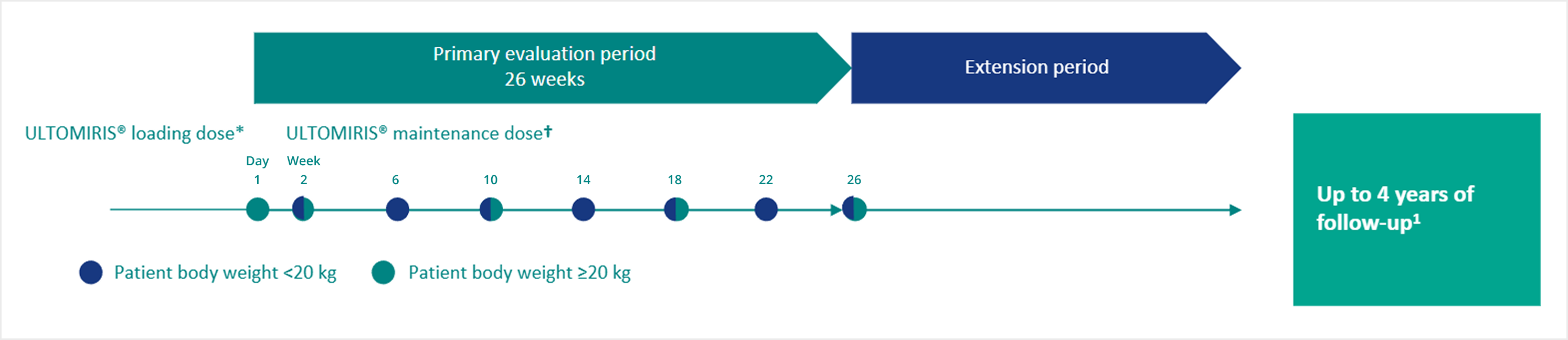
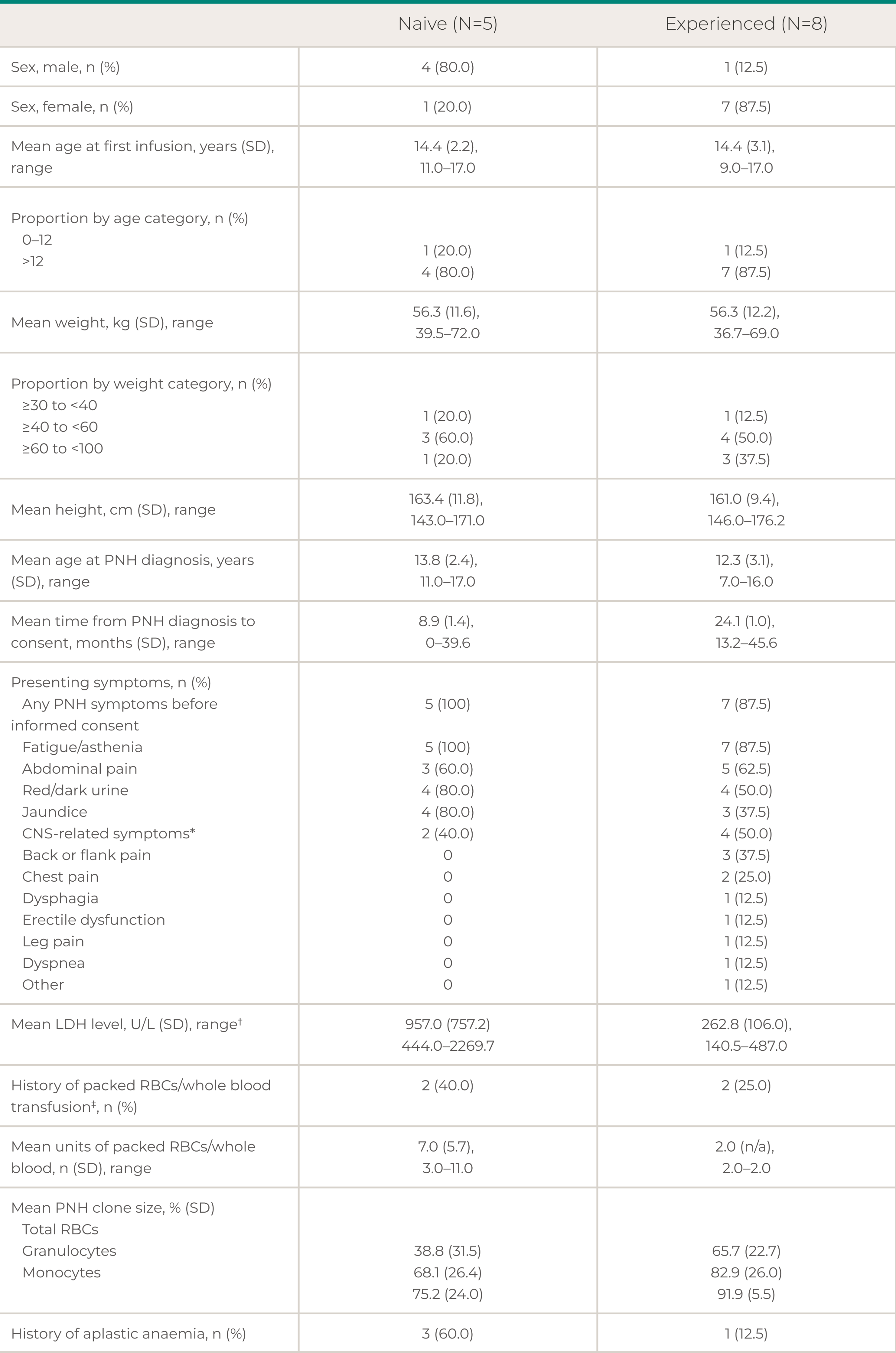
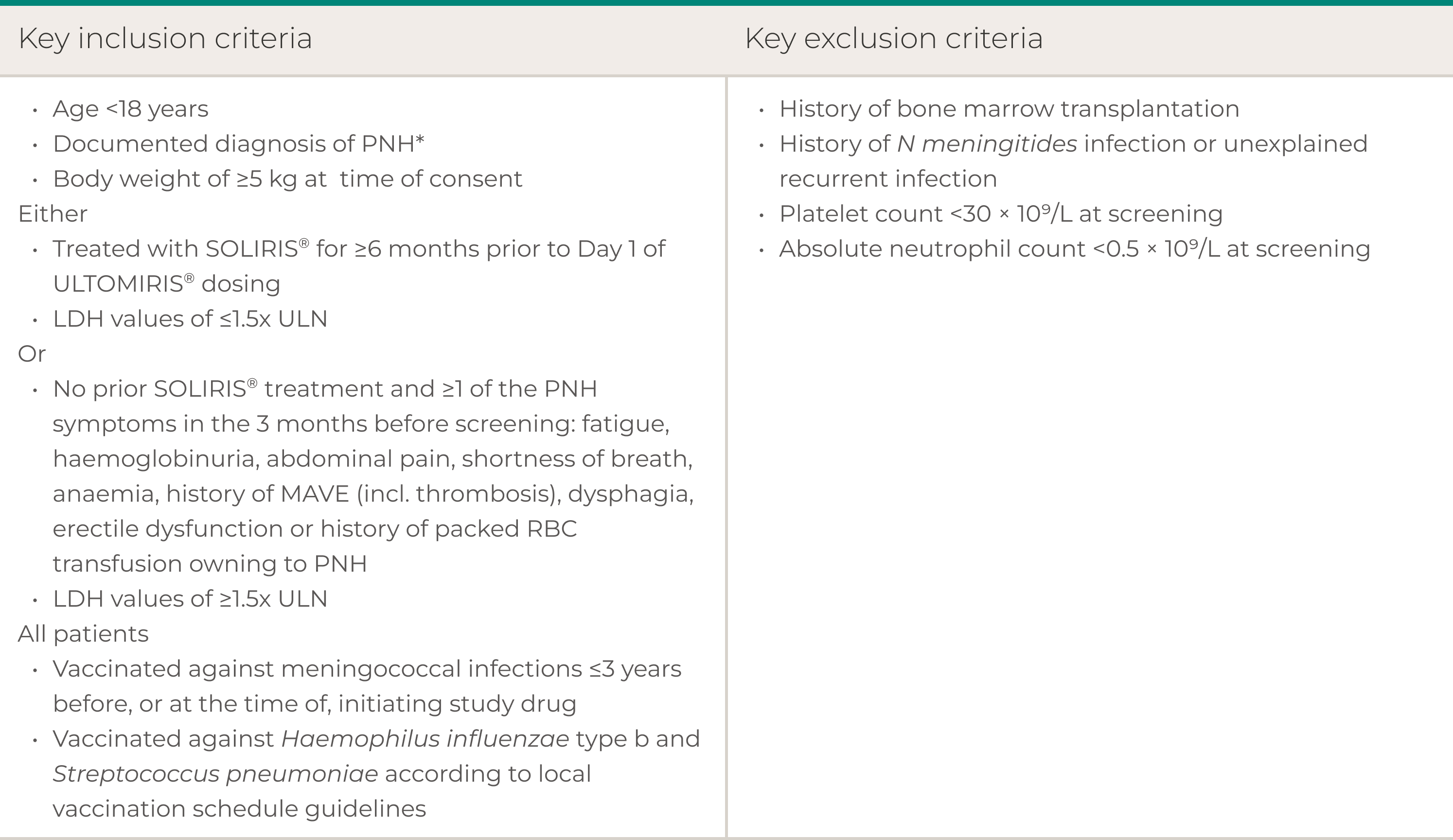
The study evaluated the efficacy and safety of ULTOMIRIS® children (<18 years and ≥5 kg) either complement inhibitor-naive or treated with SOLIRIS® (eculizumab) for ≥6 months before Day 1 of study from France, the Netherlands, Norway, Russia, UK, and USA (Study 304).1
*ULTOMIRIS® loading dose was: 600mg for patients weighing ≥5kg to <10kg; 600mg for patients weighing ≥10kg to <20kg; 900mg for patients weighing ≥20kg to <30kg; 1200mg for patients weighing ≥30kg to <40 kg; 2400mg for patients weighing ≥40kg to <60kg; 2700mg for patients weighing ≥60kg to <100kg; and 3000mg for patients weighing ≥100kg.1

ULTOMIRIS® maintenance dose was: 300mg for patients weighing ≥5kg to <10kg (Q4W); 600mg for patients weighing ≥10kg to <20kg (Q4W); 2100mg for patients weighing ≥20kg to <30kg (Q8W); 2700mg for patients weighing ≥30kg to <40kg (Q8W); 3000mg for patients weighing ≥40kg to <60kg (Q8W); 3000mg for patients weighing ≥60kg to <100kg (Q8W); and 3300mg for patients weighing ≥100 kg (Q8W). If a patient’s weight changed from <20kg to ≥20kg on a Q4W visit, the patient received the Q4W dose that day, but the new Q8W dose at the patient’s next Q8W visit.1
*Confirmed by high-sensitivity flow cytometry evaluation of RBCs and WBCs with granulocyte or monocyte clone size of ≥5%.1

*For example headache, dizziness, or difficulty concentrating.1

There are multiple LDH normal ranges depending on paediatric age and sex (100–220, 100–242, 100–275, 120–290 and 140–280).1

In the 12 months before first dose of ULTOMIRIS®.1

*Measured at the end of infusion.1

Measured at the end of the dosing interval.1

Calculated as Cmax from the last maintenance dose divided by Cmax from the first maintenance dose.1                                                                                                                                                                                                                

Please report any adverse events via your national reporting system. Adverse events can also be reported to Alexion, AstraZeneca Rare Disease by contacting: https://contactazmedical.astrazeneca.com/
Cmax, maximum serum concentration; CNS, central nervous system; Ctrough, trough serum concentration; FACIT-F, Functional Assessment of Chronic Illness Therapy-Fatigue; Hb, haemoglobin; LDH, lactose dehydrogenase; MAVE, major adverse vascular event; PNH, paroxysmal nocturnal haemoglobinuria; Q4W, every 4 weeks; Q8W, every 8 weeks; RBC, red blood cell; SD, standard deviation; ULN, upper limit of normal; WBC, white blood cell.
Chonat C, et al. Pharmacokinetics, pharmacodynamics, efficacy, and safety of ravulizumab in pediatric paroxysmal nocturnal hemoglobinuria. Blood Advances. 2024;8(11):2813–2824.