



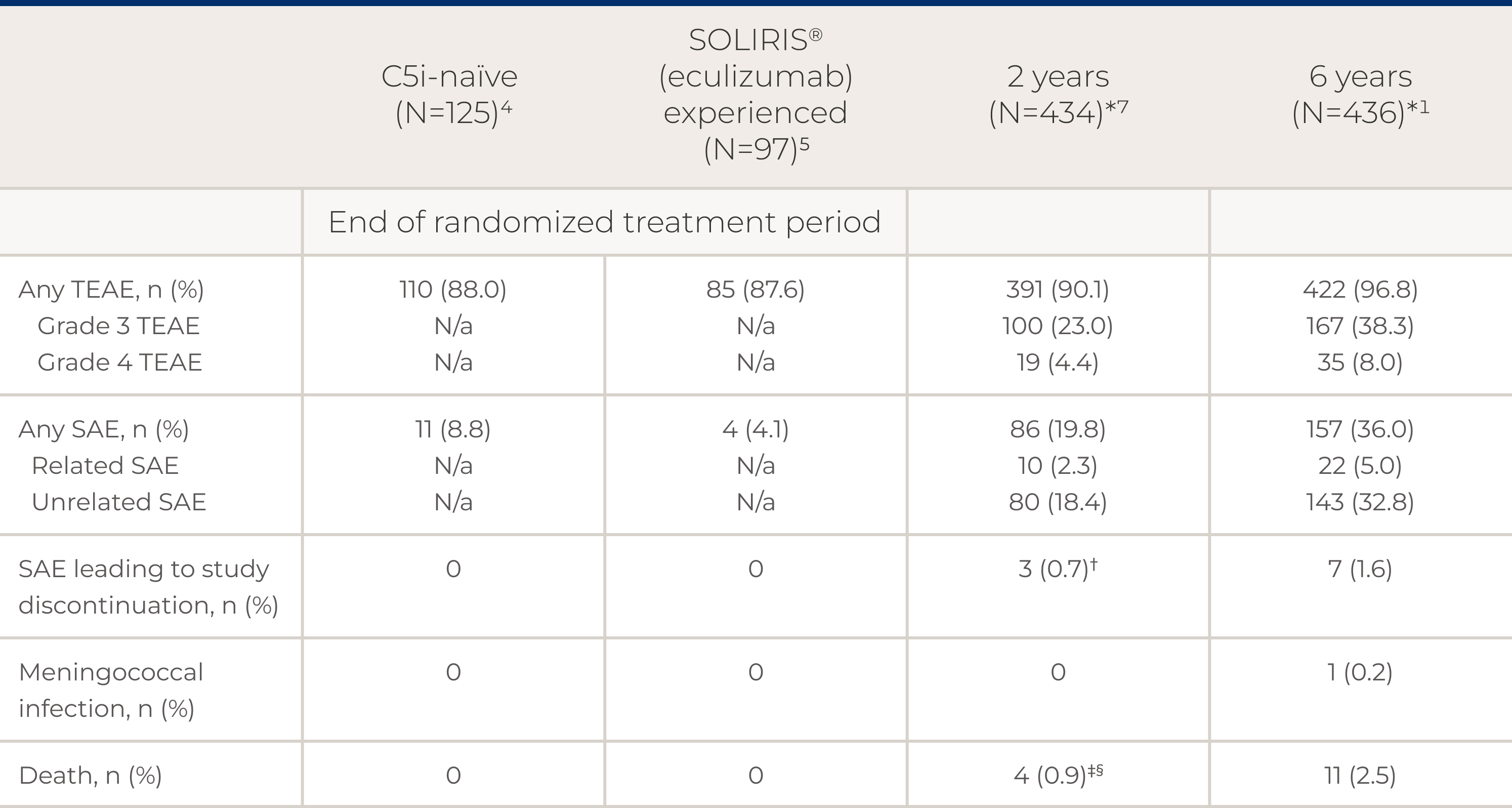
†Discontinued with AML, MDS, and lung adenocarcinoma. All were deemed unrelated to study drug.7
‡Causes of death were pulmonary sepsis, AML, lung adenocarcinoma, and malignant lung neoplasm. All were deemed unrelated to study drug.7
§The two deaths leading to study drug discontinuation were acute myeloid leukemia and lung adenocarcinoma.7
The most serious adverse reactions are meningococcal infection (0.7%) including meningococcal sepsis, meningococcal meningitis, encephalitis meningococcal, meningococcal infection and disseminated gonococcal infection (0.2%) including disseminated gonococcal infection and gonococcal infection.8
Please refer to the SmPC for further safety information.8
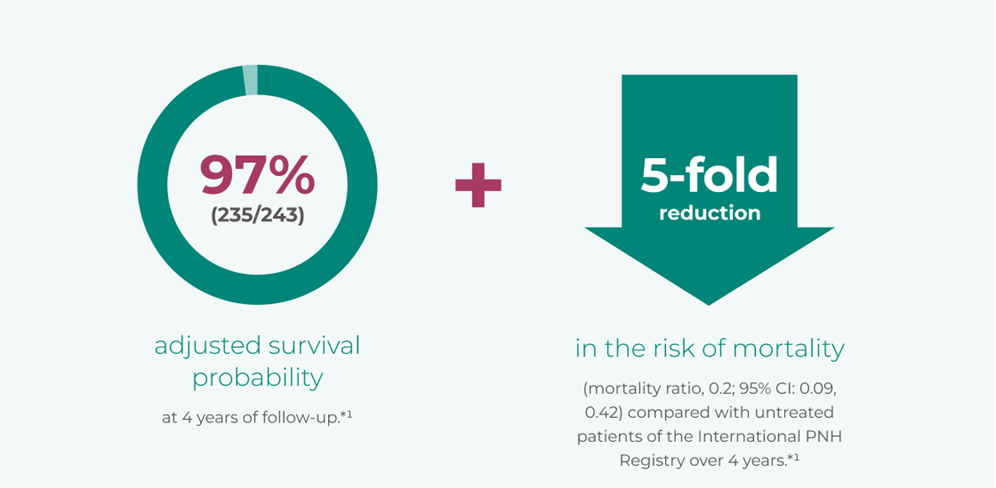
*Survival was not a prespecified endpoint of the 301 study or open-label extension, rather a post hoc analysis; the study was not powered to detect differences in survival. Death was a post hoc safety endpoint. ULTOMIRIS® data were compared with 414 untreated patients from the International PNH Registry. Survival probability was adjusted for age at PNH diagnosis, gender, and transfusion history.1,4
†Retrospective study comparing results from 389 patients with PNH, treated with SOLIRIS® and/or ULTOMIRIS®, between 2002 and 2022 vs. population mortality data taken from the human mortality database for the UK (1841–2020), stratified based on age and sex. The observed survival was not a prespecified endpoint, and the study was not powered to detect differences. This analysis excluded patients receiving an allogeneic HSCT, those with bone marrow dysfunction or those with clonal evolution to MDS or AML.9