


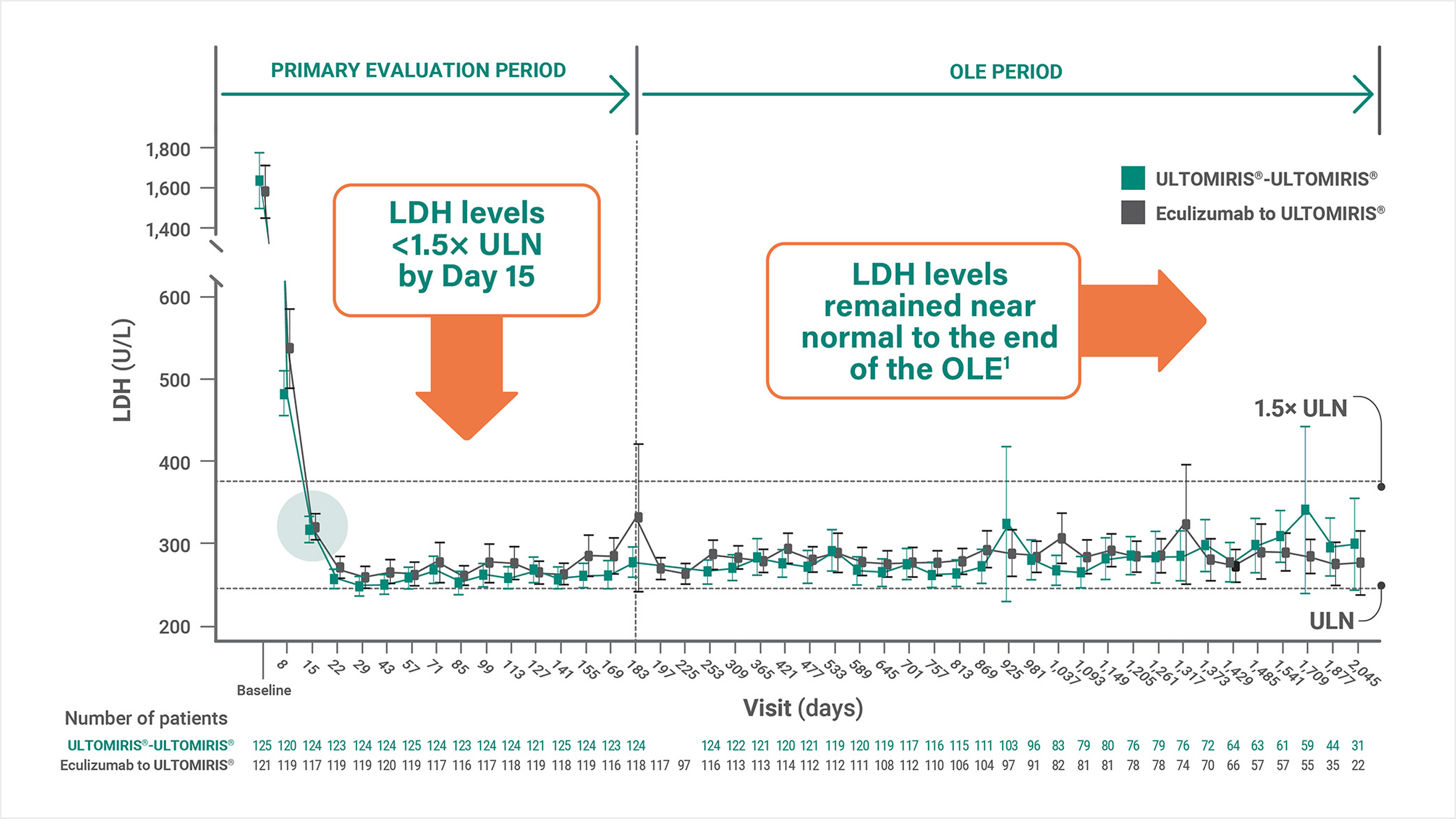
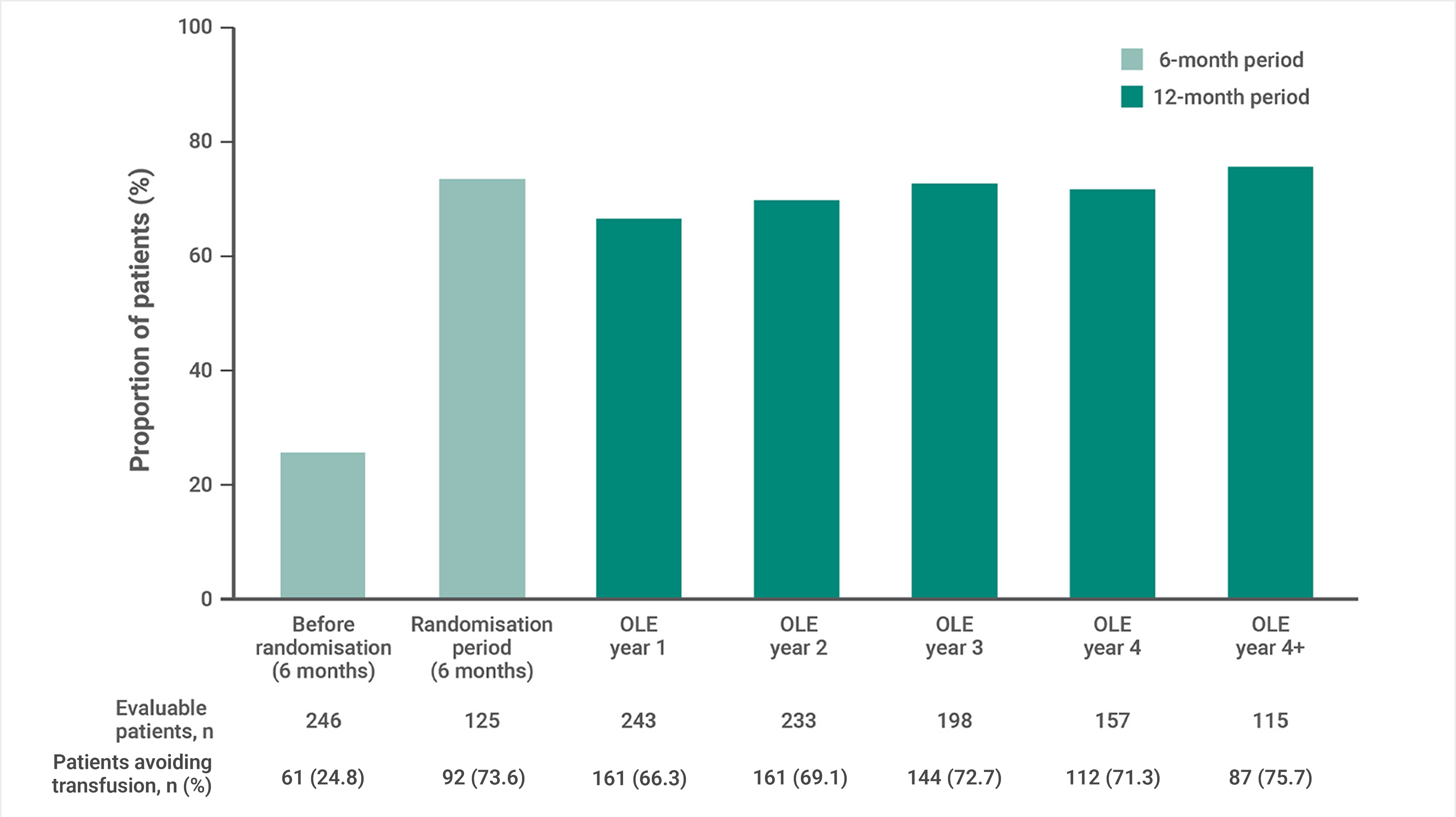
Primary endpoints were met in both Study 301*† and Study 302:†‡1,2
All secondary endpoints were met in both Study 301*† and Study 302†‡1,2
*Study 301 was a Phase 3 multicentre, randomised, active-controlled, open-label, non-inferiority study to evaluate the efficacy and safety of ULTOMIRIS® vs SOLIRIS® (eculizumab) in treatment-naïve adults with a documented diagnosis of PNH. Patients were treated with ULTOMIRIS® or SOLIRIS® over a 26-week initial evaluation period. Key inclusion criteria: age ≥18 years, diagnosis of PNH, granulocyte or monocyte clone size ≥5%, and LDH level ≥1.5× ULN at screening. Key exclusion criteria: complement inhibitor-experienced, weight <40 kg. Key inclusion criteria: age ≥18 years, diagnosis of PNH, granulocyte or monocyte clone size ≥5%, and LDH level ≥1.5× ULN at screening. Coprimary endpoints were transfusion avoidance, defined as the proportion of patients who remain transfusion-free and do not require a transfusion per protocol specified guidelines through Day 183, and haemolysis as measured by LDH normalisation (≤1× ULN, [246U/L]) from Days 29 through 183. Key secondary endpoints included: % change from baseline to Day 183 in LDH and quality of life (assessed via FACIT–F); proportion of patients with breakthrough haemolysis defined as ≥1 new or worsening sign or symptom of IVH (fatigue, haemoglobinuria, abdominal pain, dyspnoea, anaemia [Hb <10g/dL]), MAVEs [including thrombosis], dysphagia, or erectile dysfunction) in the presence of LDH ≥2× ULN after prior reduction of LDH to <1.5× ULN on treatment and proportion of patients with stabilised Hb (defined as avoidance of a ≥2g/dL decrease in Hb from baseline in the absence of transfusion).1
†ULTOMIRIS® dosing in the clinical trials was consistent with the recommendations in the ULTOMIRIS® SmPC.4
‡Study 302 was a Phase 3 multicentre, randomised, active-controlled, open-label, non-inferiority study to evaluate the efficacy and safety of ULTOMIRIS® vs SOLIRIS® in SOLIRIS®-experienced adult patients with a documented diagnosis of PNH. Patients were treated with ULTOMIRIS® or SOLIRIS® over a 26-week initial evaluation period. Key inclusion criteria: age ≥18 years, diagnosis of PNH, granulocyte or monocyte clone size ≥5%, clinically stable on SOLIRIS® for at least 6 months. Key exclusion criteria: LDH levels >2× ULN in the 6 months before Day 1, MAVE within 6 months before Day 1, body weight <40 kg at screening. Primary endpoint was haemolysis as measured by percentage change in LDH levels from baseline to Day 183. Key secondary endpoints included: proportion of patients with breakthrough haemolysis, defined as ≥1 new or worsening symptom or sign of IVH (fatigue, haemoglobinuria, abdominal pain, shortness of breath [dyspnoea], anaemia [Hb <10 g/dL], MAVE [including thrombosis], dysphagia, or erectile dysfunction) in the presence of elevated LDH ≥2× ULN after prior reduction of LDH to <1.5× ULN on treatment; change from baseline in quality of life (assessed via FACIT–F); transfusion avoidance, defined as the proportion of patients who remained transfusion free and did not require a transfusion per protocol-specified guidelines; and proportion of patients with stabilized Hb, defined as avoidance of a ≥2-g/dL decrease in Hb level from baseline in the absence of transfusion.2


*Mean FACIT-Fatigue score for the general population was determined through assessment of 2,426 adults (n=1,074 males; n=1,352 females; mean age [SD]: 49.8 [17.4] years) in Germany between March 2015 and May 2015.14
†Improvements in QoL were evident across the broad PNH patient population studied, including those receiving transfusions and/or non-stabilised Hb.3
‡Complete C5 inhibition is defined as serum free C5 concentration <0.5 μg/mL.1,2
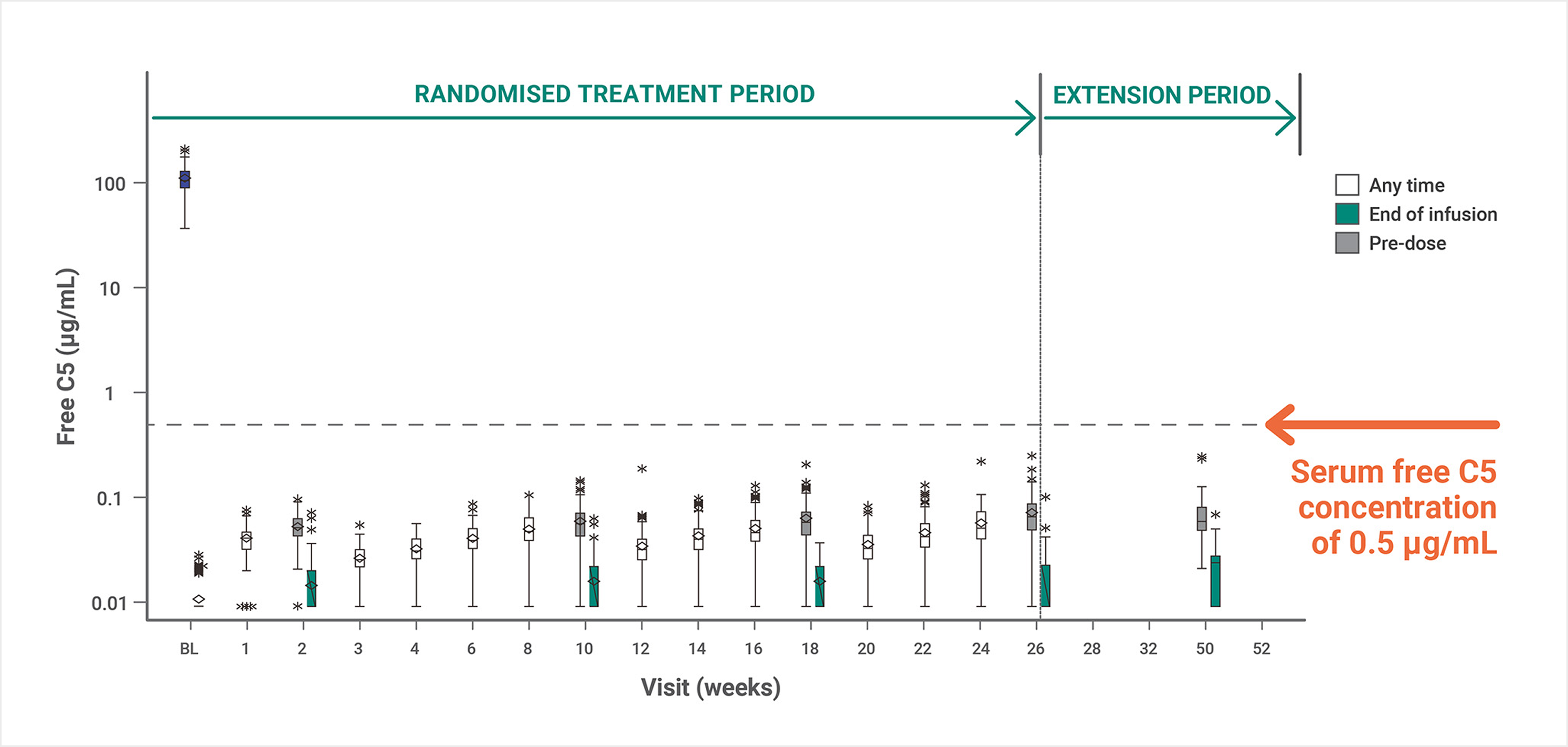
The horizontal line in the middle of each box indicates the median, and a diamond indicates the mean. The top and bottom borders of the box represent the 75th and 25th percentiles, respectively, and the whiskers represent the 1.5 interquartile range of the lower and upper quartile. Asterisks represent values outside the interquartile range. BL, baseline.
CI, confidence interval; FACIT–F, Functional Assessment of Chronic Illness Therapy – Fatigue; Hb, haemaglobin; IVH, intravascular haemolysis; LDH, lactose dehydrogenase; LS, least squares; MAVE, major adverse vascular event; C5, complement component 5; OLE, open-label extension; PNH, paroxysmal nocturnal haemoglobinuria; QoL, quality of life; SmPC, Summary of Product Characteristics; ULN, upper limit of normal.
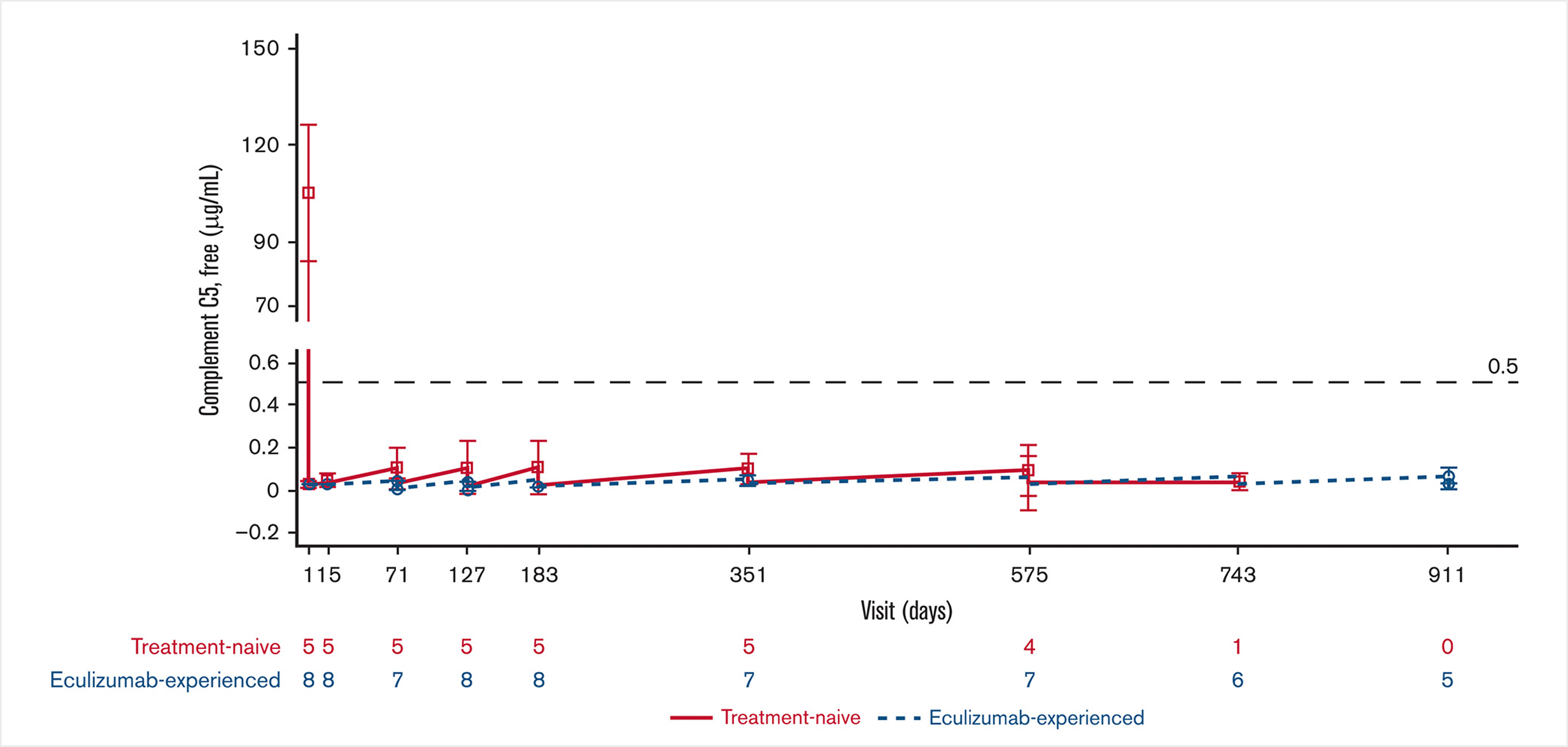
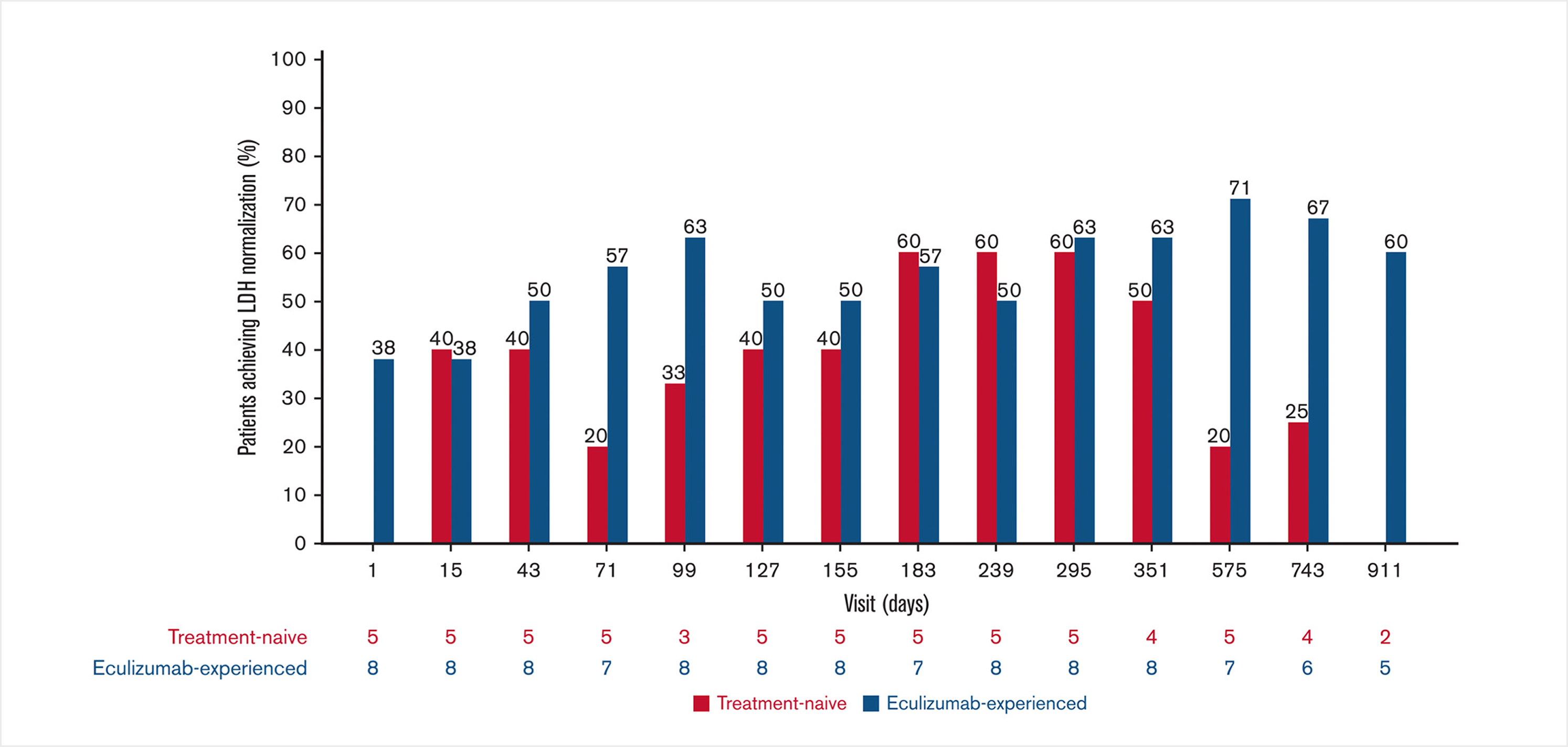
*Data collected from Phase 3, open-label, single-arm, multicenter study in 13 paediatric patients with PNH (NCT03406507). The study assessed the long-term PKs & PDs (primary endpoints), efficacy, and safety of ravulizumab treatment in eculizumab-naïve (n=5) or eculizumab-experienced (n=8) paediatric patients (aged <18 years) with PNH during 26-week primary evaluation period and 4-year extension period. Of 13 enrolled patients, 12 patients completed the extension period, and 1 eculizumab-experienced patient stopped the treatment because of their choice to undergo bone marrow transplantation on day 341 of extension period.
†The maintenance dosing schedule for ULTOMIRIS® in adults and paediatric patients who weigh ≥20 kg is once every 8 weeks. For paediatric patients who weigh ≥10 kg and <20 kg, the maintenance dosing schedule is once every 4 weeks.
Please report any adverse events via your national reporting system. Adverse events can also be reported to Alexion Pharmaceuticals by contacting:https://contactazmedical.astrazeneca.com/