

Enjoy this educational symposium from ECTRIMS 2025 delivered by three global experts in NMOSD – Prof. Sean Pittock (USA), Prof. Jérôme de Sèze (France), and Prof. Jin Nakahara (Japan) – where they share clinical insights and real-world evidence of the complement component 5 inhibitor therapies (C5IT), eculizumab and ravulizumab.
This symposium is intended for healthcare professionals and is sponsored by Alexion, AstraZeneca Rare Disease.
- Understand the burden of unmet needs in adult patients with anti-aquaporin-4 antibody-postive (AQP4-Ab+) NMOSD
- Review the evolution of NMOSD treatments
- Discuss effectiveness and safety highlights from real-world evidence with ravulizumab and eculizumab
- Explore outcomes of patients treated with ravulizumab from patient cases
Prof. Sean Pittock
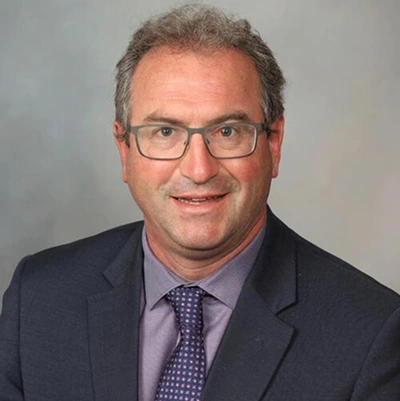
Department of Neurology
Mayo Clinic
Rochester, MN
United States of America
Prof. SEAN PITTOCK
Sean J. Pittock, M.D., is the Marilyn A. Park and Moon S. Park, M.D., Director of Mayo Clinic's Center for Multiple Sclerosis and Autoimmune Neurology and the principal investigator of Mayo's Neuroimmunology Research Laboratory.
Prof. Pittock's clinical and laboratory expertise lies in modifying, for clinical application, the antibody assays developed by the Neuroimmunology Research Laboratory. Specific areas of focus include multidisciplinary, collaborative research into autoimmune neurological disorders, autoimmune gastrointestinal dysmotility (AGID) and neuromyelitis optica spectrum disorder (NMOSD).
Complementing his laboratory research, Prof. Pittock is the founder of the Autoimmune Neurology Clinic in the Center for Multiple Sclerosis and Autoimmune Neurology, which interacts closely with the Neuroimmunology Research Laboratory and has allowed the development of a unique translational practice extending the laboratory's serological findings directly to the bedside. This new, 21st-century subspecialty addresses diagnosis and treatment of organ-specific autoimmune disorders that target the central and peripheral nervous systems.
Prof. Jérôme de Sèze

Professor of Neurology
Neuroimmunology Department Head,
Strasbourg University Hospital
Strasbourg,
France
Prof. Jérôme de Sèze
Prof. Jérôme de Sèze is a Professor in Neurology and Neuroimmunology Department Head at the University Hospital of Strasbourg.
He has a PhD in immunology and is a specialist in multiple sclerosis (MS) and neuro-ophthalmology as well as Head of the university’s clinical investigation center.
His research interests include biopathology of myelin, imaging of animal models for autoimmune and inflammatory diseases of the central and peripheral nervous systems and evaluation of new therapeutic targets in these animal models. He is widely published across the realms of MS and NMOSD pathophysiology and treatment.
In 2007, he founded the “alSacEP,” a network to improve the provision of MS care in the French region of Alsace. He is also past President of the French Multiple Sclerosis Society.
Prof. Jin Nakahara

Department of Neurology,
Keio University School of Medicine
Tokyo,
Japan
Prof. Jin Nakahara
Prof. Nakahara is a fellow and delegate of the Japanese Society of Neurology, fellow and councillor of the Japanese Society of Internal Medicine and is a director of both the Japanese Society of Neuroimmunology and the Japan Multiple Sclerosis Network. Furthermore, he is a member of the central organizing committee of Pan-Asian Committee for Treatment and Research in Multiple Sclerosis (PACTRIMS).
Prof. Nakahara is a councillor for the Japanese Society of Neurological Therapeutics, the Japanese Society for Neuroinfectious Diseases and the Japanese Society for Microcirculation and is a member of the Japanese Society of Neuropathology, the Japan Society for Dementia Research, the Japan Stroke Society, and the Japanese Headache Society. Prof. Nakahara serves on the editorial boards of the journals ’Neurology and Clinical Neuroscience, and Neuroscience Research’.
Prof. Nakahara is a recognized expert in neuroimmunology, having published more than 100 peer-reviewed articles in the field. Among his clinical and experimental research interests are autoimmune diseases of the central nervous system, which include multiple sclerosis and NMOSD.

healthcare professional
SOLIRIS® (eculizumab) is indicated for the treatment of NMOSD in adult patients who are anti-aquaporin-4 (AQP4) antibody-positive with a relapsing course of the disease.
ULTOMIRIS® (ravulizumab) is indicated in the treatment of adult patients with NMOSD who are anti-aquaporin 4 (AQP4) antibody-positive.
Ravulizumab EU Summary of Product Characteristics
Eculizumab EU Summary of Product Characteristics
Prescribing information may differ from country to country. Please refer to your locally approved label and take this into consideration when viewing this information.
Please verify reimbursement status applicable in your country.
Please report any adverse reactions via your national reporting system. Adverse events can also be reported to Alexion pharmaceuticals by the following email: https://contactazmedical.astrazeneca.com/